Hardware Development
Hardware that senses
the real world
Laser measurement, drones, radio links and detection systems. We design, build and harden devices that have to work outside the lab, with the intelligence running on the device itself.
What we do
Silicon, optics and software
Physical products fail for different reasons than software does. A sensor that is accurate on the bench drifts in the sun, a radio link that works in the office dies behind a wall, and a detector tuned in a car park cries wolf all night in a forest.
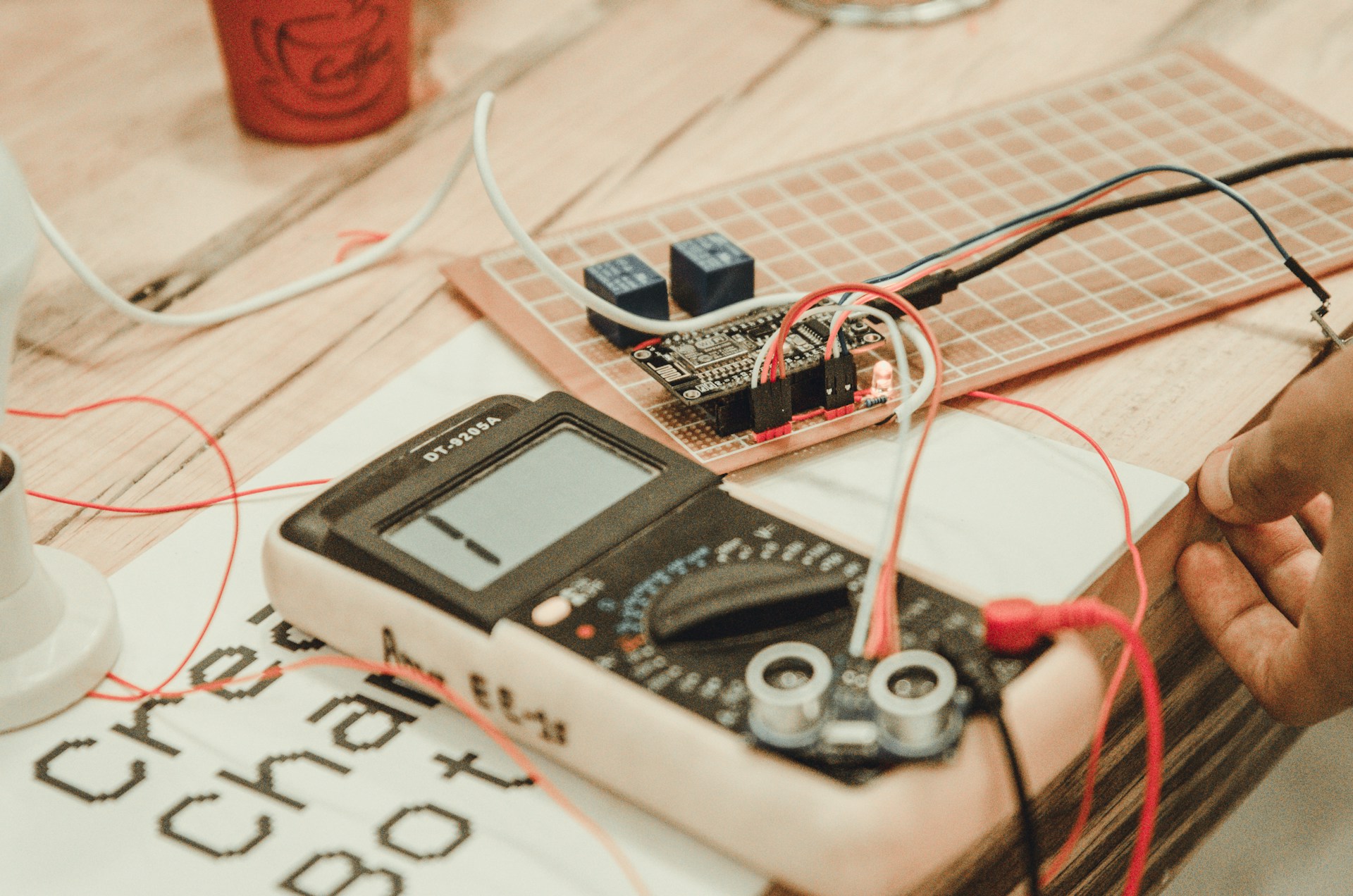
We build measurement and detection systems end to end: the optics and electronics, the firmware, the radio, the models that interpret the signal, and the software your team uses to act on it.
What we build
Measure, move, detect
Sensing and communication hardware, designed for the conditions it will be deployed in.
Laser measurement
Time-of-flight and phase-shift rangefinding, LiDAR scanning and optical alignment systems. Millimetre-accurate distance, profile and volume measurement, calibrated against the conditions it will actually work in.
Drone technologies
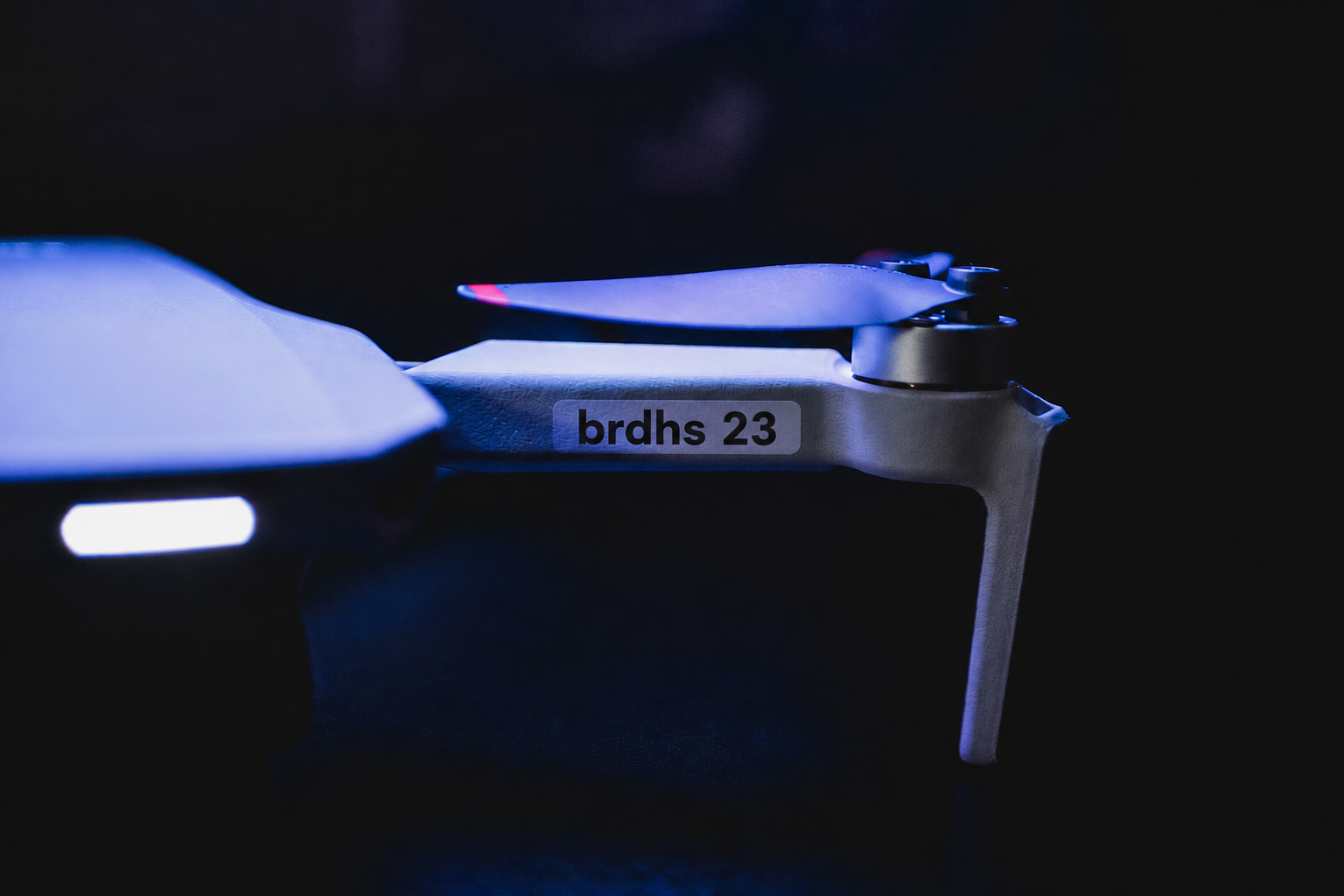
Airframes, flight controllers, payload integration and ground stations. Autonomous survey and inspection routes, live telemetry, and onboard processing so the aircraft makes decisions without waiting on a link.
Radio communication
Sub-GHz, LoRa, mesh and proprietary links for places where there is no network to lean on. Long range, low power, resilient to interference, with encryption and link budgets designed for the terrain.
Movement detection
Radar, ultrasonic, infrared and accelerometer-based sensing, fused so a swaying branch does not read as an intruder. Tuned for the false-positive rate the deployment can live with.
Object detection
Recognising and classifying what the sensor is looking at: vehicles, equipment, obstacles, defects or stock. Inference runs on the device, so classification happens without footage leaving the unit.
Embedded systems
Schematic design, PCB layout, firmware, power budgeting and enclosure work, plus the APIs and dashboards that turn a sensor into something the rest of your business can query.
How we build it
Engineered for the field
Prototype to production
We start with a bench rig that proves the physics, move to a field-testable prototype, then take it through design for manufacture. Each stage answers a specific question rather than deferring risk to the end.
Sensor fusion and edge AI
One sensor gives you a reading. Several, combined and interpreted on-device by models we train on your data, give you an answer. Hardware and intelligence are designed together, not bolted on afterwards.
Built for the field
Dust, vibration, temperature swings, bad power and no connectivity. We design for the environment the device will live in, with ingress protection, watchdogs, safe recovery and over-the-air updates.
Compliant by design
Radio spectrum rules, EMC testing, airspace regulation and data protection are constraints we plan around from the first sketch, because discovering them at certification is what kills timelines.
Hardware, meet AI
Devices that decide
A detector that streams raw data to a server is only as good as its connection. We put the model where the sensor is: compact networks trained on your own recordings, running on the device, classifying what they see in milliseconds and sending a decision rather than a firehose.
Less bandwidth, lower latency, and a unit that keeps working when the network does not.
Get started
Ready to build great hardware?
Tell us what you need to sense, track or detect, and we'll get back to you within one business day.